.png)

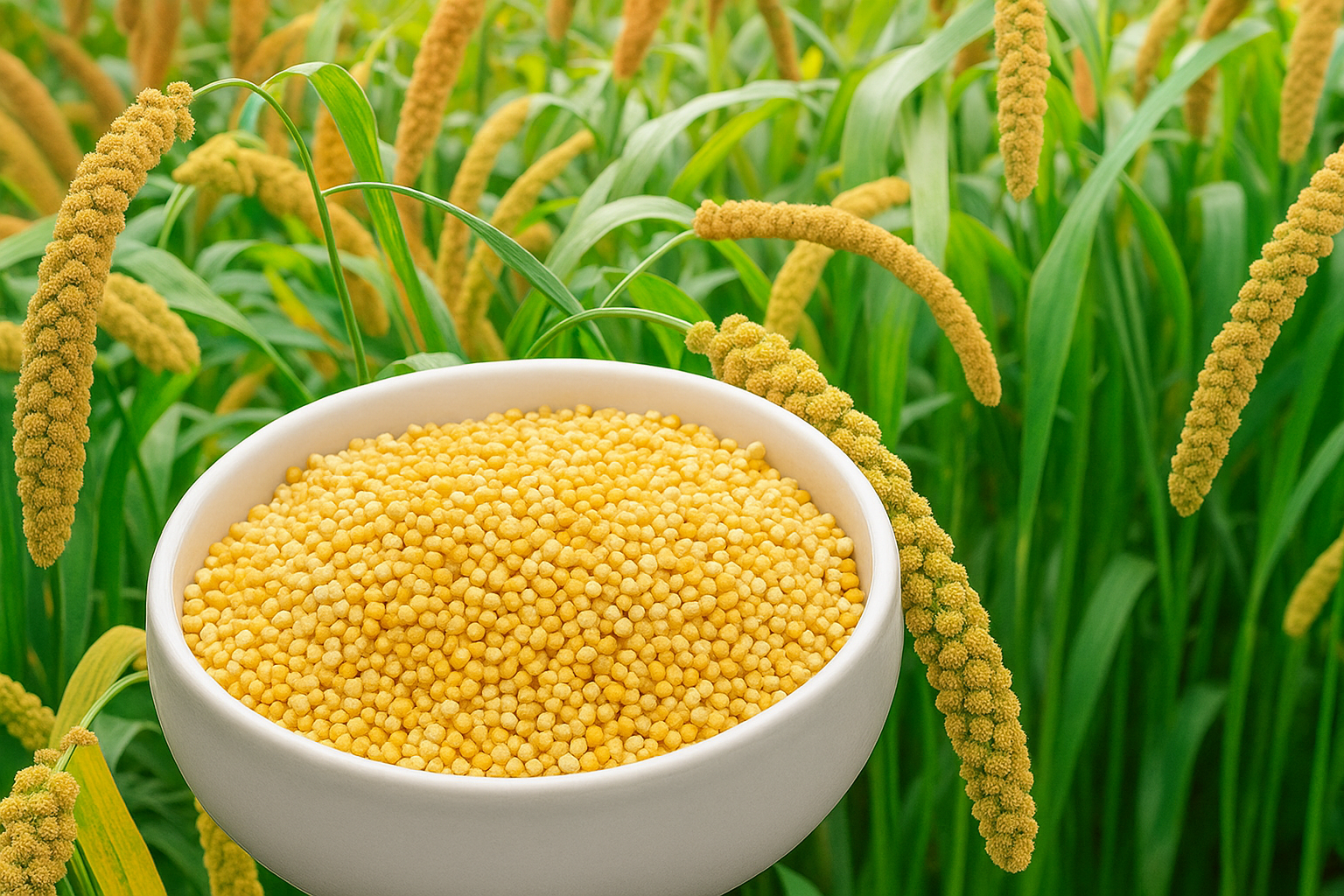
Foxtail Millet: Nutrition, Benefits & Cooking Tips
What is Foxtail Millet?
Foxtail millet is a small, yellowish, gluten-free grain that has been cultivated for thousands of years. It’s highly nutritious and known as a supergrain because it:
-
Provides sustained energy
-
Helps regulate blood sugar levels
-
Supports heart health
-
Aids digestion
-
Is naturally gluten-free and easy to digest
Because of its mild, nutty flavour and versatility, it can be used in place of rice, wheat, or other grains in many dishes.
Where is Foxtail Millet Grown?
Foxtail millet thrives in warm, dry climates and well-drained soils, making it ideal for regions with low rainfall.
Major producers:
-
India: Rajasthan, Andhra Pradesh, Karnataka, Tamil Nadu
-
China: Especially northern and western regions
-
Africa: Ethiopia, Kenya, Sudan
-
Also grown in small quantities in parts of Europe and the Americas by health-focused farmers
Its drought tolerance makes it a sustainable crop for areas facing water scarcity.
Key Health Benefits
-
Blood Sugar Control: Low glycaemic index, helps prevent spikes
-
High Fibre: Supports digestion and gut health
-
Heart Health: Rich in antioxidants and magnesium
-
Weight Management: High fibre + protein = prolonged satiety
-
Mineral Rich: Supplies iron, magnesium, and calcium
-
Gluten-Free: Suitable for coeliac/gluten-sensitive diets
Precautions
-
Start gradually if new to high-fibre foods to avoid bloating
-
Watch portions—too much can still add extra calories
-
Allergies are rare but possible; discontinue if reactions occur
-
Consult your doctor if you have specific medical conditions
How to Cook Foxtail Millet
Basic method:
-
Rinse 1 cup foxtail millet thoroughly
-
Add to 2 cups water (or broth)
-
Boil, then cover and simmer for 15–20 min until tender
Other ideas:
-
Cook with vegetables and spices for a one-pot meal
-
Use foxtail millet flour in breads, muffins, or cakes
-
Make breakfast porridge with milk, fruits, and nuts.